
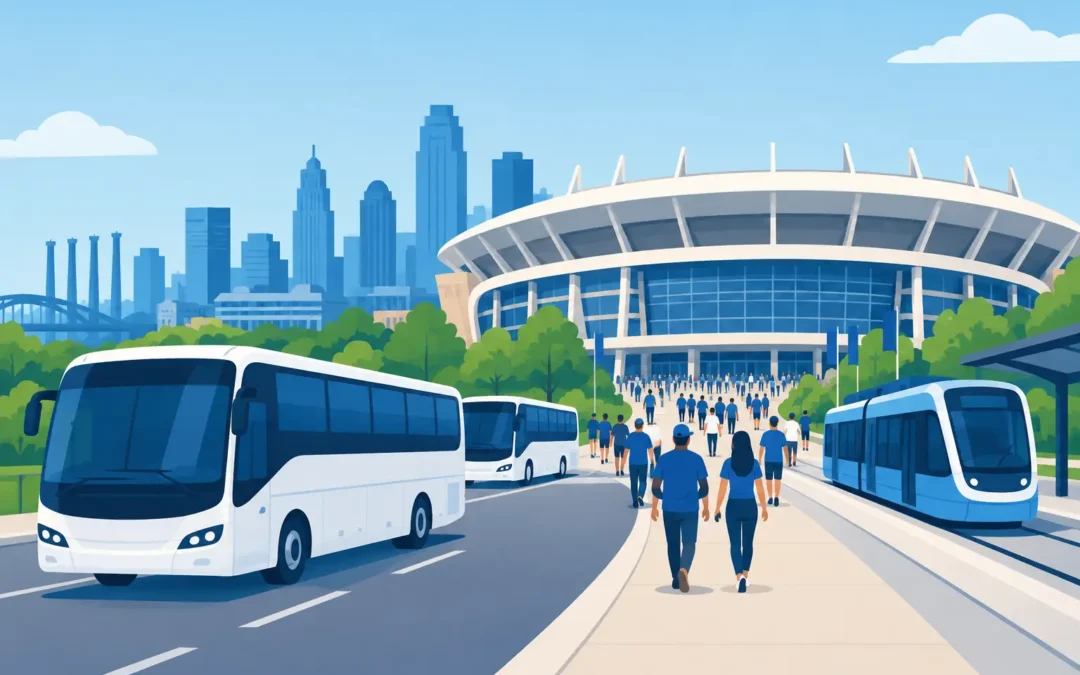
A sold-out game at Arrowhead Stadium can turn a simple ride into a long night if transportation is treated as an afterthought. Traffic builds hours before kickoff, parking lots fill, cell service can slow after the final whistle, and one missed pickup instruction can separate a group. This stadium transportation planning example shows how Kansas City guests, families, corporate hosts, and group organizers can build a ride plan that gets everyone there on time and home with less stress.
A Stadium Transportation Planning Example for Game Day
Consider a group of eight coworkers attending a 7:20 p.m. game at Arrowhead Stadium. They are meeting at an Overland Park office, want time for food and the pregame atmosphere, and need a dependable ride home without assigning a designated driver or searching for vehicles in a crowded lot.
The first decision is the arrival target, not the pickup time. For an evening game, this group may decide they want to be near the stadium by 5:30 p.m. That gives them time for stadium entry, tailgating, merchandise, and a buffer for event traffic. From there, the transportation provider and group leader work backward, allowing for the normal drive, heavier game-day congestion, loading time, and a practical cushion. A 4:30 p.m. office pickup may be more realistic than a 5:15 p.m. departure, even if the route normally takes far less than an hour.
The second decision is vehicle fit. Eight passengers may need more than eight seats once coolers, jackets, folding chairs, or personal bags enter the picture. A properly sized shuttle or private van keeps the group together and leaves room for belongings. Splitting into several cars can look less expensive at first, but it introduces parking fees, separate arrival times, and the chance that one vehicle gets delayed or lost.
Before the day of the event, the organizer confirms the pickup address, every passenger’s contact number, the preferred drop-off area, and the return instructions. Those details matter more than a vague plan to “meet outside after the game.” Stadium exits are crowded, and a clear meeting location saves time when everyone is ready to leave.
Start With the Event, Then Build the Ride Plan
Every stadium trip has a different pressure point. A noon kickoff means early morning pickups and a decision about whether passengers want breakfast before leaving. A concert may run later than expected, while a playoff game can create unusual traffic patterns and a bigger-than-normal crowd. Transportation planning should begin with the event schedule, then account for what guests want to do before and after it.
For a family heading to Kauffman Stadium, the priority may be a convenient door-to-door pickup that avoids managing children, bags, and parking after a late game. For a business group entertaining clients, the focus may be a clean private vehicle, professional chauffeur service, and enough time to arrive relaxed rather than rushed. College alumni traveling from Lawrence, Topeka, or Manhattan may need a round-trip schedule that accounts for a longer drive and a late return.
The practical questions are straightforward: What time must the group be at the venue? Where are passengers starting? How many people are traveling, and what are they bringing? Does everyone need to return together? The answers determine the vehicle, timing, and pricing structure.
Allow Extra Time Where It Counts
The drive is only one part of the trip. Guests also need time to gather at the pickup point, load the vehicle, navigate event traffic, and walk from the drop-off location to the gate. For major Kansas City events, building in extra time is usually less costly than arriving late or paying for parking only to spend much of the event in traffic.
It depends on the venue and event size, but a useful rule is to set an arrival goal 60 to 90 minutes before the start time for a standard game. For a major rivalry, postseason event, or concert with a packed parking area, the buffer may need to be longer. Groups planning tailgates should set their stadium arrival based on when they want to begin, not when the game begins.
Choose the Right Transportation Option
A good plan matches the ride to the passengers rather than forcing passengers into the cheapest-looking option. An economical shuttle can be a smart choice for a small group with light luggage and a simple itinerary. A private car service offers privacy and flexibility for couples, executives, or guests who want a quieter ride. Larger groups benefit from a vehicle that keeps everyone in one place and makes the return departure easier to manage.
Fixed pricing is especially useful for stadium transportation. Parking rates, fuel, tolls where applicable, and surge-priced rides can make self-driving or on-demand transportation harder to budget. A quoted fare lets the organizer tell everyone what to expect before the trip begins. For corporate events, that also simplifies expense planning.
There are trade-offs. A shared shuttle may offer a lower per-person cost, but a private vehicle gives the group more control over timing and stops. An hourly chauffeur arrangement can make sense when guests want transportation available across multiple locations, such as dinner, a downtown hotel, and the stadium. A round-trip reservation is often the simplest choice when the entire group plans to leave together.
Plan the Return Before the First Pickup
The postgame ride is where many otherwise good plans fail. Thousands of people leave at once, roads are congested, and passengers may be tired, cold, or ready to get home quickly. A transportation plan should identify the return meeting location, the contact process, and the expected pickup window before anyone enters the stadium.
For the group of eight, the organizer can tell passengers: return to the agreed pickup point after the game, stay together, and contact the driver only if the group is delayed or has an emergency. This is easier than trying to coordinate eight separate messages in a loud crowd. If some guests want to stay longer than others, they should arrange their own later transportation or the group should consider separate return plans from the start.
Drivers and passengers both benefit from realistic expectations. A vehicle cannot always reach a gate immediately after the event ends because stadium traffic is moving in phases. The goal is not to promise an impossible instant exit. The goal is to have a professional driver, a confirmed meeting point, and a plan that prevents guests from wandering through parking lots looking for a ride.
Keep Communication Simple
One group contact should handle final transportation details. That person can confirm the reservation, share the pickup instructions, and keep the driver informed of meaningful changes, such as a delayed game or a guest who is not arriving at the original pickup location.
Passengers should know the vehicle description, driver contact process, and return meeting point. They should also charge their phones before departure. These small steps are practical safeguards when crowds and spotty service make last-minute coordination difficult.
Make the Budget Work Without Sacrificing Reliability
Stadium transportation does not have to mean premium pricing for every trip. The best value often comes from selecting the correct vehicle, booking in advance, and dividing a known fare among travelers. Eight people sharing a scheduled private ride may find it compares favorably with multiple parking charges, fuel costs, and the uncertainty of arranging several rides after the event.
Advance reservations are particularly helpful for weekends, concerts, major sporting events, and holiday travel periods. Booking early gives the provider time to assign an appropriate vehicle and lets passengers plan around a confirmed pickup. Last-minute transportation can still be available, but choices may be more limited when demand is high.
For groups coming from different parts of the metro, a central pickup point can reduce cost and simplify timing. That said, door-to-door service may be worth the added convenience for families, older guests, visitors unfamiliar with Kansas City, or business travelers on a tight schedule. The right choice depends on the group, not a one-size-fits-all formula.
A Better Way to Arrive and Leave
A stadium outing should begin with anticipation, not a debate over who drives, where to park, or how everyone will find one another afterward. With a scheduled pickup, the right vehicle, and a clear postgame meeting plan, transportation becomes one less thing for the group to manage.
Quicksilver Airport Shuttle & Car Service has served Kansas City travelers since 1982 with scheduled transportation for airport trips, private occasions, and major local events. Whether you need an economical shuttle or a private vehicle for game day, booking ahead gives your group a confirmed plan, a predictable fare, and more time to enjoy the event. Sit back, relax, and let the ride home be part of a well-planned night.
Recent Comments